
Owner on every job · Available 7 days a week · (267) 331-1990 Get Estimate
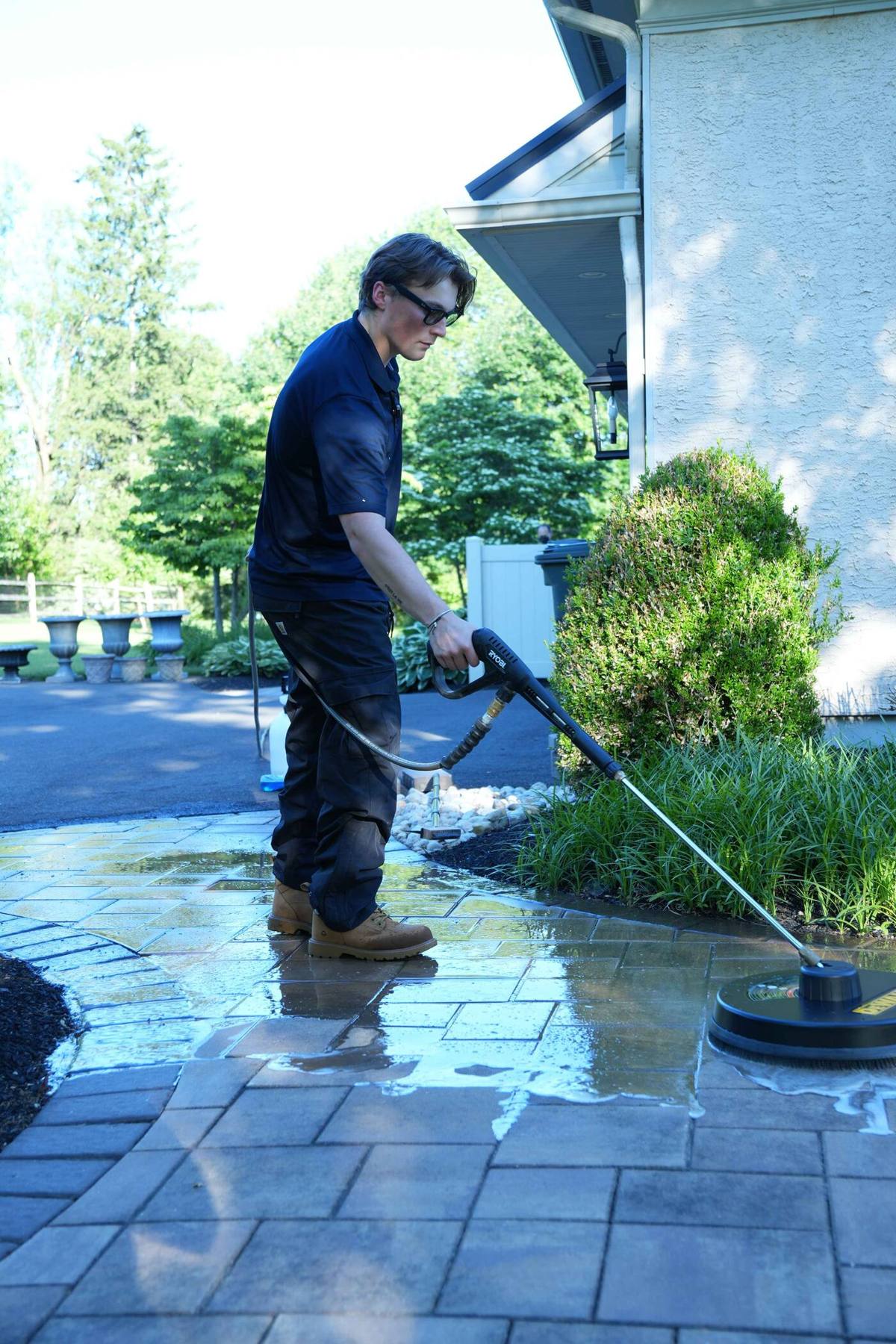
Owner of Petra Power Solutions cleaning a paver patio before sealing in Bucks County, PA
Newtown, PA · Bucks County

Paver sealing
in Bucks County, PA

Paver sealing in Bucks County protects your patio, walkway or driveway from stains, fading, weeds and freeze-thaw damage, and it runs $1.50–$2.50 per sq ft. We seal it the right way: deep clean first, re-sand the joints with commercial polymeric sand, then apply a wet-look or natural-finish sealer matched to your pavers. The owner does every job, from the estimate to the last coat.

Pavers sunken or joints washed out? Start with paver restoration, or see paver patio repair if the patio was built badly.

★★★★★ 5.0★ from 61 reviews on Google
Fully Insured
Owner-Operated
Get a Free Estimate Call (267) 331-1990

Now booking December · Free on-site estimate · We reply within 2 hours during business hours.

★★★★★ 5.0★ · 61 Reviews on Google
Fully Licensed & Insured
Owner on Every Job
Based in Newtown, PA · Bucks County

Why seal pavers

Why seal pavers
in Bucks County?

Concrete pavers are porous. Left bare, they soak up rain, snowmelt, leaf tannins, grill grease and whatever drips off the car. In a Pennsylvania yard that water also freezes, expands and thaws again, over and over each winter, and that cycle is what breaks down joint sand and wears the surface of the paver.

A professional-grade sealer soaks into the paver surface and the joint sand and slows all of that down. It repels water so less of it freezes inside the paver, helps hold polymeric sand in the joints, keeps the sun from bleaching the color and lets spills wipe up instead of soaking in. Sealing a patio that is still sound is one of the cheapest ways to keep it from ever needing a tear-out.

  • ✓Resists stains: oil, grease, food, drinks and leaf tannins wipe up instead of soaking in.
  • ✓Guards against freeze-thaw: less water inside the paver means less of it freezing and expanding.
  • ✓Holds the joint sand: helps polymeric sand stand up to rain and washout.
  • ✓Fewer weeds and ants: tight, full joints leave them little room to settle in.
  • ✓Keeps the color: UV protection slows fading, and a wet-look finish deepens it.
  • ✓Easier to clean: dirt and algae rinse off a sealed surface with far less effort.

Our process

Clean, re-sand, seal:
in that order.

Sealer locks in whatever is underneath it. Sprayed over dirt, empty joints or sunken pavers, it seals the problem in. That is why sealing is always the last step on our jobs, never the first.

01
Deep clean and inspect
We clean the full surface, lift dirt, algae and stains, and clear the old sand and debris out of the joints. Then we walk it for sunken sections, cracked pavers and spots that hold water, and tell you plainly if any need restoration before sealing.
02
Re-sand with polymeric sand
Once the surface is dry, the joints are refilled with commercial-grade polymeric sand, not the box-store kind. It bonds harder, locks the pavers together and stands up to water without washing out. More in our polymeric sand guide.
03
Let it cure
The sealer goes on only after the pavers are dry and the sand has fully cured. Sealer also needs a dry surface and a dry forecast to cure properly, so we schedule around the weather instead of forcing it.
04
Seal
We apply a penetrating (natural-look) or wet-look sealer chosen for your paver type, at the right coat thickness, so it protects without turning cloudy or slick. Then we tell you how long to stay off it.

Finishes

Wet-look or
natural finish?

There are two finishes, and the right one depends on your pavers and the look you want.

Natural (penetrating) sealer soaks into the paver and leaves it looking close to how it looks dry, with a matte finish and protection mostly below the surface. It changes the color least and is the least prone to buildup.

Wet-look sealer deepens the color and adds a sheen, as if the pavers just got rained on. It is the more dramatic finish, and the one where getting the coat thickness right matters most. The wrong product on the wrong paver is a common cause of cloudy, blotchy sealing jobs, so we recommend one at the estimate. If your pavers already look hazy, read what white haze on pavers means first.

How often to reseal

Reseal every
2 to 4 years.

In Bucks County, plan on resealing pavers every 2 to 4 years. Driveways with daily car traffic and full-sun or pool-side patios fall closer to 2 years; covered or lightly used areas can go closer to 4.

You don't need a calendar. Pour a glass of water on the sunniest spot and the spot people walk on most. If it beads up, the sealer is still working. If it darkens the paver and soaks in, it is time to reseal. Sealing every year usually backfires: layers build up, trap moisture and can turn cloudy, slippery or peel. A yearly cleaning on our patio care plan keeps each coat lasting longer. The full schedule is in how often to seal pavers.

A quick note

Paver sealing,
not asphalt sealcoating.

This page is about sealing pavers: concrete paver and natural stone patios, walkways, pool surrounds and paver driveways. It is not asphalt driveway sealcoating, the black coat sprayed on blacktop driveways. We don't sealcoat asphalt. If your driveway is pavers, we clean, re-sand and seal it with a sealer suited to vehicle traffic.

We seal pavers across Bucks County, from our home base in Newtown to Yardley, Doylestown, New Hope, Langhorne and Richboro, plus the rest of our service area. Small jobs can often be quoted from photos.

Pricing

What paver sealing
costs.

Paver sealing runs $1.50–$2.50 per sq ft, depending on the paver type, the sealer and the condition of the surface. It is priced separately from restoration, so you only pay for what the patio needs.

Paver Sealing — Bucks County PA
Professional-grade paver sealing$1.50–$2.50 per sq ft
Basic restoration (clean & re-sand)Starting at $750
Paver drivewaysQuoted on site

Your exact number is confirmed at the free on-site estimate. What moves the price is broken down in paver sealing cost in Bucks County.

Common questions

→Do pavers have to be cleaned and re-sanded before sealing?

Yes. Sealer locks in whatever is underneath it, so the surface needs a deep clean and the joints refilled with polymeric sand first. Sunken sections should be reset before sealing too; that is part of a paver restoration. The sealer goes on only after everything is dry and the sand has fully cured.

→How long after sealing can I use my patio?

Sealer needs 24 to 48 hours to cure before foot traffic. Driveways need longer before cars go back on, and we give you the exact wait for the sealer used on your job.

→Will sealing make my pavers slippery?

Not when it is applied at the right thickness. Slick, cloudy pavers usually come from sealer built up in layers, often from resealing before the old coat wore off. A natural, penetrating sealer changes the surface least. We match the sealer to your pavers and how the area is used.

→Can you seal pavers that are sinking or uneven?

Not until they are fixed. Sealing over sunken pavers or empty joints just locks the problem in. We reset them first as part of a restoration, and if the patio was built on a bad base we explain your options on our paver patio repair page.

→Do you sealcoat asphalt driveways?

No. We seal pavers and natural stone, including paver driveways, but we don't sealcoat asphalt (blacktop) driveways.

Client reviews

5.0 stars from 61 Google reviews.
All real neighbors.

Read all 61 on our Google Business Profile →5.0 average · unedited · verified by Google

5.0on Google · 61 reviews

Worked with us? Leave a review on Google

Get started

Get your free paver
sealing estimate.

We reply within 2 hours during business hours. Takes 30 seconds. Most Bucks County paver jobs are scheduled within the week.

Now booking December · Weekend slots fill first

Takes about 30 seconds. No obligation · We'll call or text you back fast.

Or call us directly

Call (267) 331-1990 View All Services

No obligation·Free on-site estimate·61 Google reviews, 5.0★·Newtown, PA·Fully insured

Related services

Paver restoration · Paver patio repair · Annual paver maintenance · Restore or replace? · How often to seal pavers

Free Estimate Call Now